Walter Stace

Mysticism and Philosophy

This book is a classic in the field of mysticism and has been long out of print, and practically unavailable: The only copy in the Auckland public library system went missing several years ago. For this reason I have made substantial portions of the book available on this site (along with comments). If you hold the copyright to this book, please contact me and I shall either remove it or negotiate an appropriate fee.

The basic thesis Stace advances in this book is that mysticism is an area of experience that is neither objective nor subjective, and one that is beyond the laws of logic.

Logic is the set of rules which governs relationships between a multiplicity of things. When that multiplicity disappears in the undifferentiated unity of the mystical experience, so does logic, and so does the subsequent order/disorder which Stace postulates as the feature that distinguishes objective from subjective reality.

The area is then ripe for and replete with paradox as a characteristic feature of attempts to describe it. DCW

Contents

Preface

Chapter One: Presuppositions of the Enquiry

    1. The Enquiry Is Worthwhile
    2. Mohammed's Donkey
    3. The Naturalistic Principle
    4. The Principle of Causal Indifference
    5. Experience and Interpretation
    6. Catholicity of Evidence

Chapter Two: The Problem of the Universal Core

    1. The Nature of the Problem
    2. Visions and Voices Are Not Mystical Phenomena
    3. Discounting Raptures, trances and Hyperemotionalism
    4. Towards a Solution
    5. Extrovertive Mysticism
    6. Borderline Cases
    7. Introvertive Mysticism
    8. Introvertive Mysticism: The Dissolution of Individuality
    9. Is Hinyana Buddhist Mysticism an Exception
    10. An Objection Considered
    11. Conclusions.

Chapter Three: The Problem of Objective Reference

  1. The Argument From Unanimity
  2. Transubjectivity
  3. The Feeling of Objectivity
  4. Mystical Monadism
  5. The Universal Self; and the Vacuum-Plenum
  6. The Word "God"
  7. The Theory of "Being Itself"
  8. The Theory of "Poetic Truth"
  9. The Status of the Universal Self
  10. Alternative Solution

Chapter Four: Pantheism, Dualism and Monism

  1. Pantheism
  2. Dualism
  3. Critique of Dualism
  4. Monism
  5. Justification of Pantheism

Chapter Five: Mysticism and Logic

  1. The Mystical Paradoxes
  2. The Theory of Rhetorical Paradox
  3. The Theory of Misdescription
  4. The Theory of Double Location
  5. The Theory of Ambiguity
  6. An Objection
  7. Previous Recognitions of the Contradiction Theory
  8. Philosophical Implications of the Paradoxes

Chapter Six: Mysticism and Language

  1. The Problem Stated
  2. Alleged Scientific Revelations
  3. Common-sense Theories
    1. The Emotion Theory
    2. The Spiritual Blindness Theory
  4. The View That Mystical or Religious Language is Symbolic
    1. The Dionysian Theory
    2. The Metaphor Theory
  5. Suggestions Towards a New Theory

Chapter Seven: Mysticism and Immortality

Chapter Eight: Mysticism, Ethics and Religion

  1. The Mystical Theory of Ethics
  2. Mysticism and the Good Life in Practice
  3. Mysticism and Religion


W.T. Stace: Home Page

W.T. Stace: Selections from other writings

-oOo-

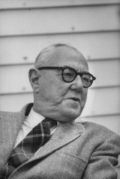
W. T. Stace was born in London in 1886. He was educated at Fettes College, Edinburgh, and at Trinity College, Dublin, where he graduated in philosophy. he served in the Ceylon Civil Service from 1910 - 1932 and was at one time Mayor of Colombo. In 1929, Mr Stace obtained a D.Litt from Trinity College, Dublin. In 1932 he went to Princeton University as a lecturer and was Professor of Philosophy there from 1935 until his retirement.